(365) 226-10-97 buxdpi@buxdpi.uz 2 Piridastgir Street, Bukhara City
shape
shape

How to Find Scopus Articles? A Practical Guide for Students and Researchers

  • Home
  • Talabalar uchun
  • How to Find Scopus Articles? A Practical Guide for Students and Researchers
How to Find Scopus Articles? A Practical Guide for Students and Researchers

How to Find Scopus Articles? A Practical Guide for Students and Researchers

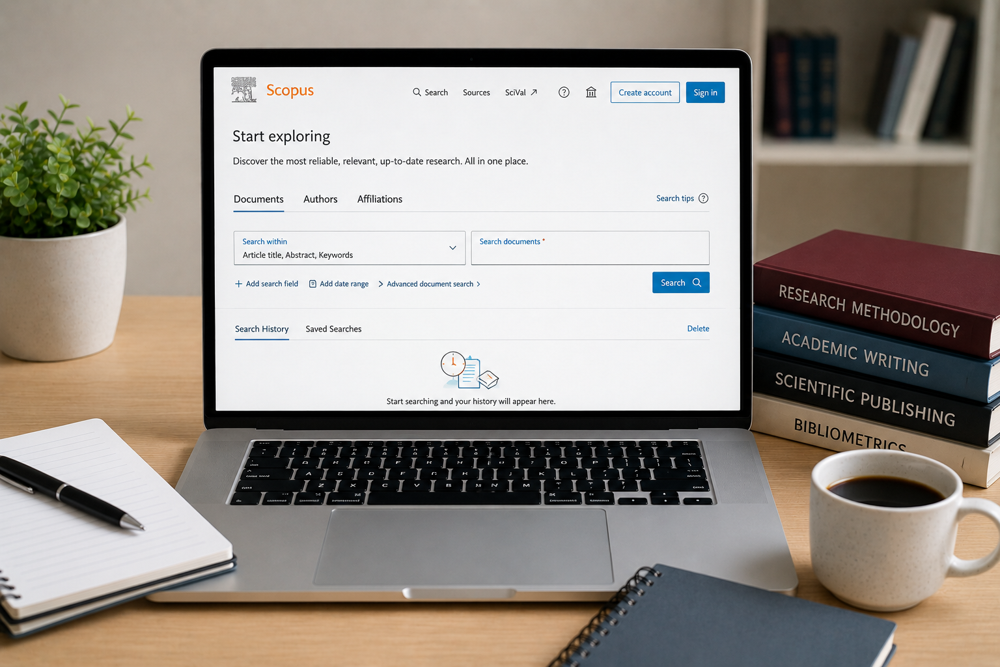
Access to reliable academic literature is one of the most important requirements for conducting high-quality research. Among the world's largest scientific databases, Scopus is recognized as one of the most trusted and comprehensive sources of scholarly publications. It indexes millions of peer-reviewed journal articles, conference papers, books, book chapters, and other academic resources across a wide range of disciplines.

Today, Scopus is widely used by universities, research institutions, professors, graduate students, doctoral candidates, and researchers worldwide. Because publications indexed in Scopus undergo rigorous peer review, they are considered highly credible and academically valuable. Therefore, using Scopus sources is strongly recommended when preparing course papers, bachelor's theses, master's dissertations, doctoral research, and scientific articles.


1. What Is Scopus?

Scopus is a comprehensive abstract and citation database developed by Elsevier.

It provides access to:

  • peer-reviewed journal articles;
  • conference proceedings;
  • book chapters;
  • review articles;
  • academic journals;
  • author profiles;
  • institutional profiles;
  • citation information.

Scopus covers thousands of international journals and is considered one of the most authoritative databases for academic research.


2. Where Can You Find Scopus Articles?

Full access to Scopus is usually available through university or institutional subscriptions. If your university subscribes to Scopus, you can access its complete collection through your campus network or library portal.

If you do not have direct access, you can still search for Scopus-indexed publications by:

  • searching the article title in Google Scholar;
  • visiting the author's personal webpage;
  • checking university repositories;
  • searching institutional archives;
  • looking for Open Access versions of the publication.

Many authors legally share preprints or accepted manuscripts through institutional repositories or personal academic websites.


3. Use Effective Keywords

Choosing appropriate keywords is essential for obtaining accurate search results.

For example:

❌ Education

✔ Artificial Intelligence in Education

✔ Digital Learning Technologies

✔ Teacher Professional Development

✔ Inclusive Education

The more precise your search terms are, the more relevant the results will be.


4. Search by Author

If you are interested in a particular researcher, Scopus allows you to search using the author's name or Scopus Author ID.

This enables you to view:

  • all publications by the author;
  • citation counts;
  • h-index;
  • research interests;
  • collaboration networks.

Author searches are especially useful when reviewing the work of leading experts in your research field.


5. Search by Journal

Scopus also allows users to search publications by journal title.

This helps researchers:

  • browse journal issues;
  • find articles on specific topics;
  • evaluate journal quality;
  • identify reputable academic publications.

Choosing articles from well-established journals improves the reliability of your research.


6. Use Search Filters

Scopus provides advanced filtering options to narrow search results.

You can filter publications by:

  • publication year;
  • subject area;
  • document type;
  • author;
  • institution;
  • language.

Using filters saves time and helps locate the most relevant academic sources.


7. Choose Open Access Articles

Not every article indexed in Scopus is freely available.

However, publications marked as Open Access can usually be read and downloaded without payment.

This is especially beneficial for students and researchers who do not have institutional subscriptions.


8. Check Citation Counts

Scopus provides detailed citation information for every indexed publication.

You can see:

  • the total number of citations;
  • citation trends;
  • the author's h-index;
  • research impact indicators.

Highly cited articles are generally considered influential within their academic disciplines.


9. Use Scopus for Literature Reviews

Scopus is one of the best resources for preparing comprehensive literature reviews.

It helps researchers:

  • identify current research trends;
  • understand existing knowledge;
  • discover research gaps;
  • compare different scientific approaches;
  • build a strong theoretical foundation for their studies.

A thorough literature review is essential for producing high-quality academic work.


10. Best Practices for Using Scopus Articles

When working with Scopus publications, researchers should:

  • cite sources correctly;
  • respect copyright regulations;
  • avoid plagiarism;
  • prioritize recent and reliable publications;
  • compare findings from multiple studies;
  • critically evaluate research quality before using it.

These practices improve both the credibility and academic value of research.


Common Mistakes When Searching Scopus

Researchers frequently make mistakes such as:

  • relying only on old publications;
  • using a single article as the main reference;
  • choosing ineffective keywords;
  • downloading articles without reading the abstract;
  • ignoring the quality and reputation of the journal;
  • overlooking recent developments in the field.

Avoiding these mistakes leads to more comprehensive and reliable research.


Tips for Finding Better Scopus Articles

To improve your search results:

  • Use specific academic keywords in English.
  • Read the abstract before downloading the full paper.
  • Apply publication year filters to access the latest research.
  • Review citation counts to identify influential studies.
  • Compare multiple publications instead of relying on one source.
  • Explore the references cited within important articles.
  • Keep track of useful papers using citation management software.

Developing these research habits will significantly improve your academic writing and research skills.


Conclusion

Scopus is one of the world's most respected academic databases and an essential resource for students, researchers, and educators. It provides access to high-quality scholarly publications, supports literature reviews, simplifies citation analysis, and helps researchers stay informed about the latest scientific developments. By learning how to search effectively, apply advanced filters, evaluate journal quality, and use reliable academic sources responsibly, students can produce stronger research papers, graduation theses, and scientific publications while developing valuable research skills for their future academic and professional careers.

SEO Keywords: Scopus, Scopus articles, Scopus database, academic research, scholarly articles, literature review, research papers, international journals, citation analysis, academic writing, higher education, research skills, Bukhara State Pedagogical Institute.