(365) 226-10-97 buxdpi@buxdpi.uz 2 Piridastgir Street, Bukhara City
shape
shape

What Is Burnout? Causes, Symptoms, Prevention, and Recovery Strategies

  • Home
  • Psixologiya
  • What Is Burnout? Causes, Symptoms, Prevention, and Recovery Strategies
What Is Burnout? Causes, Symptoms, Prevention, and Recovery Strategies

What Is Burnout? Causes, Symptoms, Prevention, and Recovery Strategies

In today's fast-paced world, increasing academic demands, workplace responsibilities, constant connectivity, and information overload have made burnout a growing concern for students, educators, healthcare professionals, and employees across many industries. While occasional stress is a normal part of life, prolonged and unmanaged stress can gradually lead to burnout, affecting physical health, emotional well-being, motivation, and overall quality of life.

The World Health Organization (WHO) defines burnout as a syndrome resulting from chronic workplace stress that has not been successfully managed. Burnout is not simply feeling tired after a busy day. Instead, it is a state of long-term emotional, physical, and mental exhaustion that often requires meaningful lifestyle changes, organizational support, and sometimes professional assistance.

For students and future educators of the Bukhara State Pedagogical Institute, understanding burnout and learning effective prevention strategies are essential for maintaining psychological well-being, achieving academic success, and building sustainable professional careers.


1. What Is Burnout?

Burnout is a state of emotional, physical, and mental exhaustion caused by prolonged exposure to chronic stress.

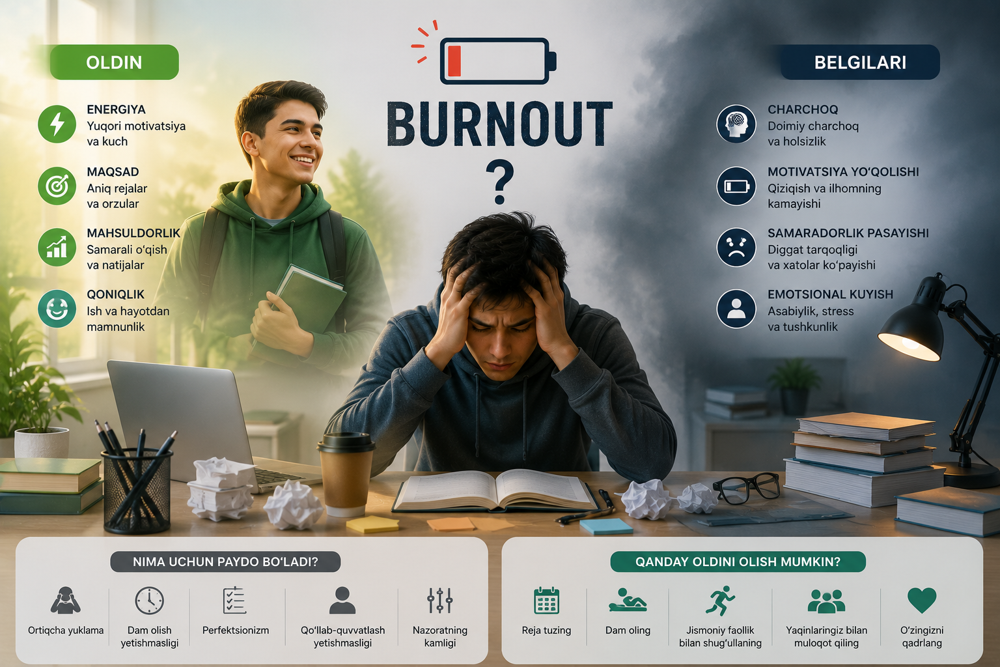
According to psychological research, burnout typically consists of three major dimensions:

  • emotional exhaustion;

  • detachment or cynicism toward work or study;

  • reduced sense of personal accomplishment.

Burnout develops gradually rather than suddenly, making early recognition especially important.


2. Common Causes of Burnout

Burnout usually develops through the combination of multiple stressors rather than a single event.

The most common causes include:

  • excessive academic or work demands;

  • unrealistic expectations;

  • insufficient rest;

  • poor work-life balance;

  • lack of control over responsibilities;

  • continuous deadlines;

  • inadequate organizational support;

  • prolonged emotional pressure.

When these conditions persist over time, the risk of burnout increases significantly.


3. Symptoms of Burnout

Recognizing burnout early allows individuals to take appropriate action before symptoms become more severe.

Common emotional symptoms include:

  • constant fatigue;

  • loss of motivation;

  • emotional numbness;

  • frustration;

  • anxiety;

  • irritability.

Physical symptoms may include:

  • headaches;

  • sleep disturbances;

  • muscle tension;

  • frequent illnesses;

  • low energy levels.

Behavioral symptoms often involve:

  • reduced productivity;

  • procrastination;

  • withdrawal from social activities;

  • declining academic or work performance.


4. Burnout vs. Ordinary Fatigue

Burnout is often confused with normal tiredness, but they are fundamentally different.

Ordinary fatigue:

  • is temporary;

  • usually improves after rest;

  • does not eliminate enthusiasm for work or study.

Burnout:

  • develops over a long period;

  • persists despite rest;

  • significantly reduces motivation;

  • negatively affects emotional health and performance.

Understanding this distinction helps individuals seek support at the appropriate time.


5. Burnout Among Students

Burnout has become increasingly common among university students.

Major contributing factors include:

  • examination pressure;

  • heavy coursework;

  • limited time for recovery;

  • financial concerns;

  • uncertainty about future careers;

  • balancing education with personal responsibilities;

  • social expectations.

Student burnout may result in declining academic performance, reduced engagement, and increased emotional distress.


6. Burnout Among Educators

Teaching is widely recognized as one of the professions most vulnerable to burnout due to its emotional demands.

Factors contributing to educator burnout include:

  • large teaching workloads;

  • administrative responsibilities;

  • classroom management challenges;

  • continuous assessment duties;

  • pressure to meet educational standards;

  • limited opportunities for recovery.

Supporting teachers' well-being is therefore essential for maintaining educational quality.


7. Preventing Burnout

Burnout prevention requires consistent self-care and healthy professional habits.

Effective prevention strategies include:

  • maintaining a healthy work-life balance;

  • setting realistic goals;

  • taking regular breaks;

  • exercising consistently;

  • getting adequate sleep;

  • eating a balanced diet;

  • practicing mindfulness and relaxation techniques;

  • seeking support from colleagues, friends, or family.

Preventive habits are generally more effective than attempting to recover after severe burnout has developed.


8. Artificial Intelligence and Burnout Prevention

Artificial Intelligence can help reduce workload by automating repetitive tasks.

AI tools may assist with:

  • scheduling and calendar management;

  • task prioritization;

  • lesson planning;

  • document organization;

  • productivity analysis;

  • workflow automation.

However, AI should be considered a productivity aid rather than a treatment for burnout. Individuals experiencing persistent emotional exhaustion should consult qualified healthcare or mental health professionals.


9. Healthy Habits That Support Recovery

Recovering from burnout often requires gradual lifestyle adjustments.

Helpful habits include:

  • establishing healthy daily routines;

  • practicing mindfulness or meditation;

  • spending time outdoors;

  • engaging in enjoyable hobbies;

  • maintaining supportive relationships;

  • limiting unnecessary work outside scheduled hours;

  • celebrating small achievements;

  • seeking professional support when needed.

Recovery is usually a gradual process that requires patience and consistency.


10. Why Is Burnout Awareness Important?

Understanding burnout enables individuals to:

  • recognize warning signs early;

  • protect their mental health;

  • maintain long-term productivity;

  • improve academic and professional performance;

  • strengthen emotional resilience;

  • create healthier learning and working environments.

For future educators, burnout awareness is an essential professional competency that contributes to sustainable teaching careers.


Future Perspectives

As education and workplaces continue to evolve, burnout prevention is becoming a major priority.

Emerging developments include:

  • AI-assisted workload management;

  • digital wellness platforms;

  • flexible working and learning models;

  • organizational well-being programs;

  • resilience training;

  • mental health awareness initiatives;

  • personalized stress management solutions.

These approaches aim to create healthier educational and professional environments while improving overall well-being.


Conclusion

Burnout is a serious condition caused by prolonged and unmanaged stress that affects emotional health, physical well-being, motivation, and professional performance. Unlike ordinary fatigue, burnout cannot usually be resolved through rest alone and often requires comprehensive lifestyle adjustments, supportive environments, and sometimes professional assistance. Maintaining healthy routines, managing time effectively, establishing work-life balance, and seeking support when necessary are among the most effective ways to prevent burnout. For students and future educators of the Bukhara State Pedagogical Institute, understanding burnout and adopting preventive strategies are essential for achieving academic success, maintaining psychological well-being, and building rewarding, sustainable careers in education.

SEO Keywords: burnout, emotional burnout, occupational burnout, student burnout, teacher burnout, burnout prevention, stress management, mental well-being, emotional resilience, educational psychology, Bukhara State Pedagogical Institute, workplace stress.