(365) 226-10-97 buxdpi@buxdpi.uz 2 Piridastgir Street, Bukhara City
shape
shape

Stress Management: Effective Strategies for Students and Educators

  • Home
  • Psixologiya
  • Stress Management: Effective Strategies for Students and Educators
Stress Management: Effective Strategies for Students and Educators

Stress Management: Effective Strategies for Students and Educators

In today's fast-paced world, stress has become an inevitable part of everyday life. Academic responsibilities, examinations, deadlines, personal expectations, and professional commitments can place significant pressure on both students and educators. While stress cannot always be avoided, learning how to manage it effectively is essential for maintaining physical health, emotional well-being, and academic success.

Stress management refers to the ability to recognize stressors, respond to them in healthy ways, and maintain emotional balance during challenging situations. Effective stress management improves concentration, enhances productivity, strengthens resilience, and contributes to a healthier lifestyle. In modern education, stress management is recognized as an important life skill that supports both personal development and professional growth.

For students and future educators of the Bukhara State Pedagogical Institute, understanding stress management techniques is essential for maintaining psychological well-being, improving learning outcomes, and developing the resilience needed for successful careers in education.


1. What Is Stress?

Stress is the body's natural physical and psychological response to situations that require adaptation or change.

A moderate level of stress can be beneficial because it helps individuals stay alert, focused, and motivated. However, prolonged or excessive stress can negatively affect both mental and physical health.

Common symptoms of stress include:

  • persistent fatigue;

  • anxiety;

  • irritability;

  • difficulty concentrating;

  • sleep disturbances;

  • headaches;

  • muscle tension;

  • decreased motivation.

Recognizing these signs early is the first step toward effective stress management.


2. Types of Stress

Stress can generally be classified into three major categories.

Acute Stress

Acute stress is short-term and usually results from immediate challenges such as examinations, presentations, interviews, or important deadlines.

Chronic Stress

Chronic stress develops when stressful situations continue over an extended period without adequate recovery. It can significantly affect health, relationships, and academic performance.

Positive Stress (Eustress)

Not all stress is harmful. Positive stress, known as eustress, motivates individuals to perform better, overcome challenges, and achieve important goals.

Examples include preparing for competitions, starting a new academic program, or accepting new professional responsibilities.


3. Common Causes of Student Stress

Students experience stress for various reasons.

The most common causes include:

  • examinations and assessments;

  • heavy academic workload;

  • poor time management;

  • financial concerns;

  • adapting to university life;

  • family or personal issues;

  • uncertainty about future careers;

  • balancing academic and personal responsibilities.

Understanding these stressors helps educators provide appropriate support.


4. Effects of Stress on Learning

When stress becomes overwhelming, it can negatively influence academic performance.

Possible consequences include:

  • reduced concentration;

  • memory difficulties;

  • lower motivation;

  • decreased classroom participation;

  • poor decision-making;

  • emotional exhaustion;

  • declining academic achievement.

Managing stress effectively allows students to remain focused and perform at their best.


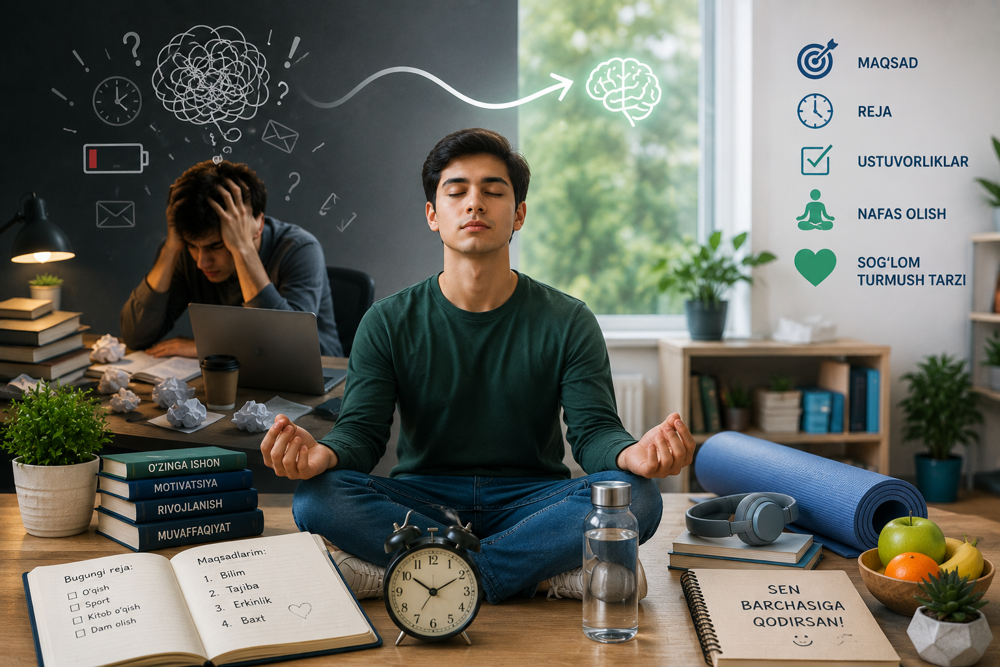
5. Effective Stress Management Techniques

Several practical strategies can help reduce stress and improve well-being.

These include:

  • planning daily activities;

  • setting realistic goals;

  • engaging in regular physical exercise;

  • maintaining healthy eating habits;

  • getting sufficient sleep;

  • practicing deep breathing exercises;

  • meditation and mindfulness;

  • spending time with supportive friends and family.

Consistent application of these habits builds long-term resilience.


6. Time Management and Stress Reduction

Poor time management is one of the leading causes of academic stress.

Students can reduce stress by:

  • creating daily and weekly schedules;

  • prioritizing important tasks;

  • breaking large assignments into smaller steps;

  • avoiding procrastination;

  • scheduling regular breaks;

  • maintaining a healthy study-life balance.

Good time management increases productivity while reducing anxiety.


7. Technology for Stress Management

Digital technology offers numerous tools that support mental well-being.

Useful resources include:

  • meditation applications;

  • breathing exercise apps;

  • digital planners;

  • productivity trackers;

  • mood monitoring applications;

  • habit-building tools.

When used responsibly, these technologies can help students establish healthy routines and improve emotional well-being.


8. The Role of Educators

Teachers play a significant role in reducing student stress.

Educators can create supportive learning environments by:

  • encouraging open communication;

  • providing constructive feedback;

  • establishing clear assessment criteria;

  • promoting inclusive classrooms;

  • recognizing student achievements;

  • respecting individual learning differences.

A positive classroom atmosphere helps students feel confident, supported, and motivated.


9. Artificial Intelligence and Mental Well-Being

Artificial Intelligence (AI) is increasingly being used to support stress management and educational success.

AI-powered tools can assist by:

  • organizing study schedules;

  • monitoring learning progress;

  • recommending personalized learning resources;

  • identifying productivity patterns;

  • encouraging healthy study habits.

However, AI should be viewed as a supportive resource rather than a replacement for professional mental health services. Individuals experiencing persistent or severe stress should seek assistance from qualified healthcare or mental health professionals.


10. Why Stress Management Matters for Future Teachers

Teaching is a rewarding but demanding profession that requires emotional resilience.

Future educators should develop skills to:

  • regulate emotions effectively;

  • communicate positively with students;

  • maintain work-life balance;

  • solve problems calmly;

  • prevent professional burnout;

  • support students' emotional well-being.

Strong stress management skills contribute to long-term professional effectiveness and personal satisfaction.


Future Trends in Stress Management

Modern approaches to stress management continue to evolve alongside advances in psychology and technology.

Emerging trends include:

  • AI-assisted wellness applications;

  • personalized mental health support;

  • mindfulness-based educational programs;

  • digital well-being platforms;

  • wearable health monitoring devices;

  • resilience training integrated into educational curricula.

These innovations aim to help students and educators maintain better mental health while adapting to increasingly dynamic educational environments.


Conclusion

Stress is a natural part of life, but learning how to manage it effectively is essential for academic achievement, professional success, and overall well-being. Healthy lifestyle habits, effective time management, supportive educational environments, regular physical activity, mindfulness practices, and responsible use of digital technologies all contribute to better stress management. For students and future educators of the Bukhara State Pedagogical Institute, developing stress management skills is an important step toward becoming resilient, confident, and successful professionals capable of thriving in today's rapidly changing educational landscape.

SEO Keywords: stress management, student stress, stress reduction, mental well-being, emotional resilience, time management, mindfulness, educational psychology, digital well-being, artificial intelligence in education, Bukhara State Pedagogical Institute, healthy learning environment.