(365) 226-10-97 buxdpi@buxdpi.uz 2 Piridastgir Street, Bukhara City
shape
shape

Nearpod: An Interactive Platform for Engaging Lessons and Real-Time Assessment

Nearpod: An Interactive Platform for Engaging Lessons and Real-Time Assessment

Nearpod: An Interactive Platform for Engaging Lessons and Real-Time Assessment

The integration of digital technology into education has transformed the way teachers deliver lessons and how students engage with learning. Modern classrooms require interactive, student-centered approaches that encourage participation, provide immediate feedback, and support personalized learning experiences. One platform that effectively combines these elements is Nearpod.

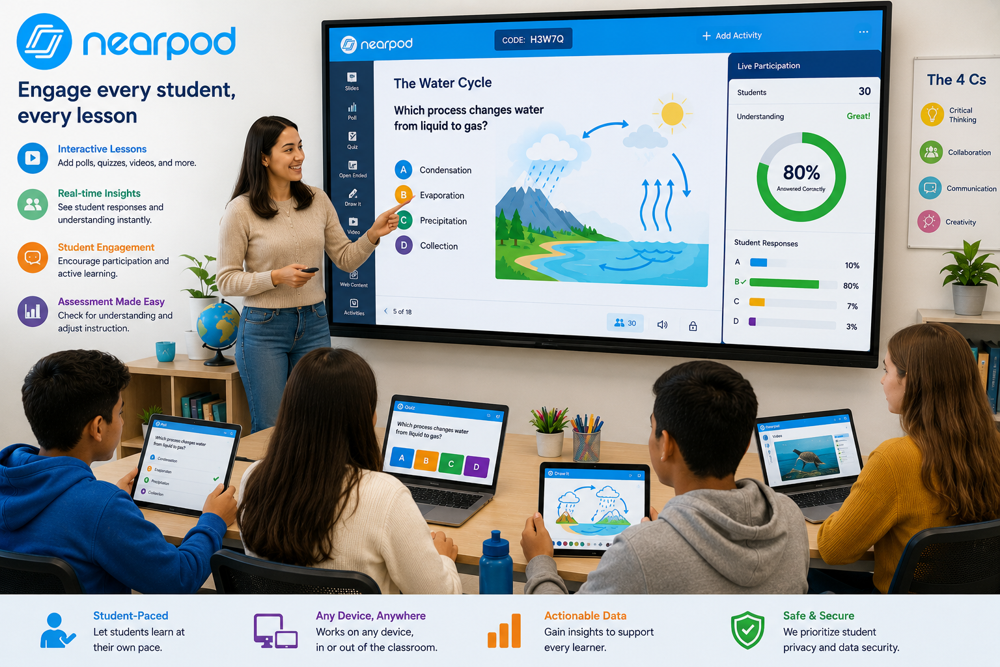
Nearpod is a cloud-based educational platform that enables teachers to create interactive lessons by integrating presentations, videos, quizzes, polls, collaborative activities, virtual reality experiences, and formative assessments into a single learning environment. The platform allows educators to monitor student participation in real time, evaluate learning progress, and adjust instruction according to students' needs.

For students and future educators of the Bukhara State Pedagogical Institute, mastering Nearpod provides valuable experience in digital pedagogy, interactive teaching, and technology-enhanced assessment that supports effective learning in both traditional and online classrooms.


1. What Is Nearpod?

Nearpod is an interactive teaching platform designed to make lessons more engaging through multimedia content and active student participation.

Using Nearpod, educators can create:

  • interactive presentations;

  • quizzes;

  • polls;

  • open-ended questions;

  • educational videos;

  • collaborative activities;

  • virtual reality (VR) field trips;

  • formative assessments;

  • gamified learning experiences.

Students can participate using computers, tablets, or smartphones, making the platform suitable for various educational settings.


2. Key Features of Nearpod

Nearpod provides numerous features that enhance classroom instruction.

Its main features include:

  • live and self-paced lessons;

  • real-time student participation;

  • multimedia integration;

  • interactive quizzes;

  • collaborative boards;

  • virtual reality experiences;

  • instant feedback;

  • automatic reporting and analytics.

These tools help educators create engaging lessons while monitoring learning outcomes efficiently.


3. Benefits for Teachers

Nearpod offers teachers comprehensive instructional support.

Educators can:

  • create interactive lessons;

  • transform existing presentations into engaging learning experiences;

  • monitor student understanding during class;

  • conduct formative assessments;

  • integrate videos and simulations;

  • organize virtual field trips;

  • access detailed learning reports.

These features enable teachers to make informed instructional decisions and provide timely support to students.


4. Benefits for Students

Students benefit from Nearpod through active participation in the learning process.

They can:

  • interact with lesson materials;

  • answer questions in real time;

  • complete quizzes and assignments;

  • participate in collaborative activities;

  • explore virtual environments;

  • receive immediate feedback on their performance.

These opportunities increase motivation, improve understanding, and promote independent learning.


5. Nearpod and Interactive Learning

Nearpod is designed around the principles of active learning.

Interactive activities available on the platform include:

  • quizzes;

  • polls;

  • Draw It activities;

  • Collaborate Board;

  • matching exercises;

  • open-response questions;

  • interactive videos;

  • gamified classroom experiences.

These activities encourage continuous participation and help maintain student attention throughout the lesson.


6. Supporting Online and Blended Learning

Nearpod is flexible enough to support multiple instructional models, including:

  • traditional classroom teaching;

  • online learning;

  • blended learning;

  • flipped classrooms;

  • teacher professional development;

  • independent learning.

Because the platform is cloud-based, students can access lessons from virtually anywhere with an internet connection.


7. Artificial Intelligence and Nearpod

Artificial intelligence is increasingly becoming part of modern educational platforms, including Nearpod.

AI-powered features can help teachers:

  • generate lesson plans;

  • create assessment questions;

  • recommend instructional activities;

  • personalize learning experiences;

  • analyze student performance;

  • reduce lesson preparation time.

Although AI improves efficiency, educators should always review AI-generated materials to ensure they align with curriculum standards and learning objectives.


8. Best Practices for Using Nearpod

To maximize the effectiveness of Nearpod lessons, educators should:

  • define clear learning objectives;

  • alternate between presentations and interactive activities;

  • incorporate multimedia appropriately;

  • monitor student responses throughout the lesson;

  • encourage participation from every student;

  • analyze reports after each lesson to improve future instruction.

Following these practices helps create engaging and effective learning experiences.


9. Limitations of Nearpod

Despite its many advantages, Nearpod has some limitations.

These include:

  • dependence on stable internet connectivity;

  • some advanced features require premium subscriptions;

  • uploading large multimedia files may take time;

  • certain customization options are limited in free accounts.

Nevertheless, Nearpod remains one of the most comprehensive platforms for interactive teaching and assessment.


10. Why Should Future Teachers Learn Nearpod?

Digital competence has become an essential requirement for modern educators.

Learning Nearpod enables future teachers to:

  • design interactive lessons;

  • conduct real-time formative assessments;

  • increase student engagement;

  • integrate multimedia into teaching;

  • personalize learning experiences;

  • strengthen digital pedagogical competencies.

These skills prepare educators to meet the evolving demands of 21st-century education.


Conclusion

Nearpod has established itself as one of the world's leading interactive learning platforms by combining multimedia instruction, student engagement, real-time assessment, and innovative technologies within a single educational environment. Its interactive activities, collaborative tools, virtual reality experiences, and detailed analytics enable teachers to create dynamic lessons that improve both teaching effectiveness and student achievement. Students and future educators of the Bukhara State Pedagogical Institute who master Nearpod will be well equipped to implement modern digital teaching strategies, foster active learning, and contribute to the advancement of innovative education in the digital era.

SEO Keywords: Nearpod, Nearpod for education, interactive teaching, formative assessment, educational technology, virtual reality in education, digital classroom, online learning, Bukhara State Pedagogical Institute, digital pedagogy.