(365) 226-10-97 buxdpi@buxdpi.uz 2 Piridastgir Street, Bukhara City
shape
shape

What Is Inclusive Education? A Modern Approach to Equal Learning Opportunities

What Is Inclusive Education? A Modern Approach to Equal Learning Opportunities

What Is Inclusive Education? A Modern Approach to Equal Learning Opportunities

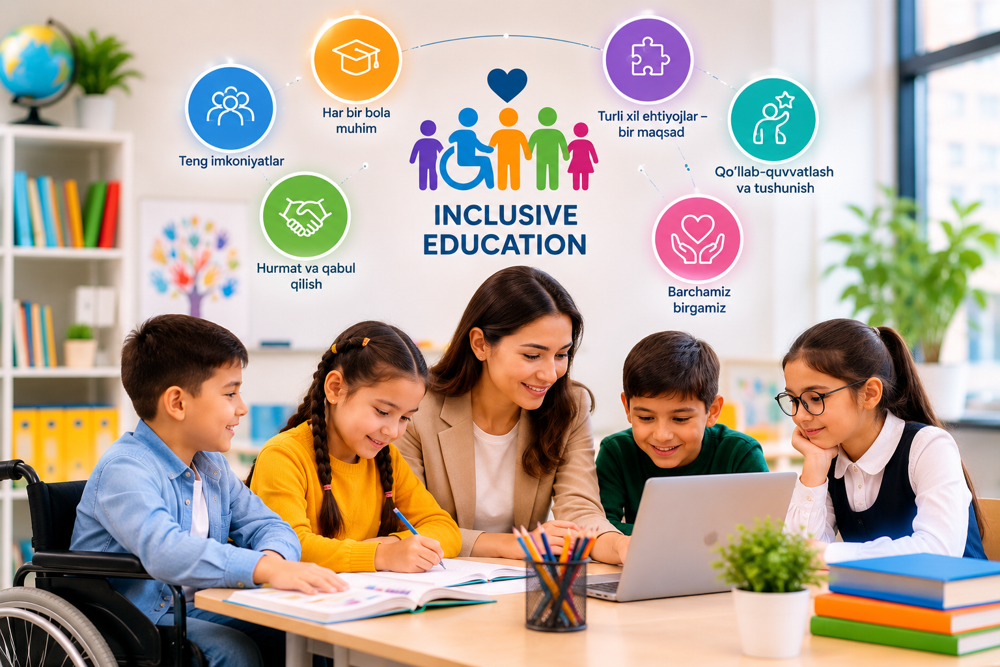
Education is a fundamental human right that should be accessible to every learner. Modern educational systems aim to ensure that all students—including those with disabilities, special educational needs, or different social and cultural backgrounds—have equal opportunities to receive quality education. This goal is achieved through inclusive education, an educational approach that promotes equal participation, diversity, and respect for every learner.

Today, inclusive education is recognized worldwide as an essential component of high-quality education because it creates learning environments where every student can develop their abilities, participate actively, and reach their full potential.

For students and future teachers of the Bukhara State Pedagogical Institute, understanding the principles of inclusive education is essential for building professional competencies and creating supportive, student-centered classrooms.


1. What Is Inclusive Education?

Inclusive education is an educational approach that ensures all learners, regardless of their physical, intellectual, sensory, social, or emotional characteristics, study together in mainstream educational settings while receiving the support they need to succeed.

The fundamental principle of inclusive education is:

"Every child has the right to quality education."

Inclusive education focuses on recognizing students' strengths, respecting diversity, and removing barriers to learning.


2. Goals of Inclusive Education

The primary objectives of inclusive education are to:

  • provide equal access to education;
  • promote educational equity;
  • eliminate discrimination;
  • support students' independence;
  • encourage respect for diversity;
  • build inclusive communities.

Its ultimate goal is to ensure that no learner is excluded from educational opportunities.


3. Principles of Inclusive Education

Inclusive education is based on several key principles:

  • equal opportunities;
  • respect for diversity;
  • individualized support;
  • collaboration;
  • active participation;
  • accessible and safe learning environments.

Every student's needs and abilities should be considered when planning instruction.


4. The Role of the Teacher

Teachers play a central role in successful inclusive education.

An inclusive educator should:

  • identify students' learning needs;
  • adapt teaching methods;
  • create a positive classroom atmosphere;
  • collaborate with parents and families;
  • work alongside psychologists, speech therapists, and other specialists;
  • encourage participation from every learner.

Teachers help create classrooms where every student feels respected and valued.


5. Individualized Learning

One of the most important features of inclusive education is individualized instruction.

This includes:

  • assessing each student's learning needs;
  • adapting learning activities;
  • selecting appropriate teaching strategies;
  • using flexible assessment methods;
  • providing additional educational support when necessary.

Individualized learning enables students to achieve their personal academic goals.


6. Benefits of Inclusive Education

Inclusive education provides advantages for all learners.

It helps:

  • improve social inclusion;
  • develop empathy and mutual respect;
  • strengthen cooperation skills;
  • increase students' self-confidence;
  • reduce prejudice and discrimination;
  • create positive classroom relationships.

Inclusive classrooms prepare students to live and work in diverse societies.


7. Technology in Inclusive Education

Modern technologies significantly improve access to education.

Examples include:

  • digital textbooks;
  • audiobooks;
  • captioned educational videos;
  • interactive learning platforms;
  • assistive technologies;
  • educational mobile applications.

Technology enables teachers to better address diverse learning needs and improve student engagement.


8. Competencies Future Teachers Need

Future educators should develop competencies in:

  • inclusive teaching strategies;
  • effective communication;
  • educational psychology;
  • digital learning technologies;
  • collaborative teamwork;
  • differentiated instruction.

These competencies help teachers provide high-quality education for every learner.


9. Recommendations for Students

Students preparing to become teachers should:

  • study inclusive education principles;
  • participate in teaching practice;
  • learn the basics of special education;
  • develop digital teaching skills;
  • strengthen empathy and communication;
  • engage in continuous professional development.

These experiences prepare future teachers for increasingly diverse classrooms.


10. Why Is Inclusive Education Important?

Inclusive education contributes to:

  • equal educational opportunities;
  • social justice;
  • respect for diversity;
  • student well-being;
  • lifelong learning;
  • sustainable educational development.

Inclusive schools help build more equitable, respectful, and supportive communities.


Conclusion

Inclusive education is a modern educational philosophy that promotes equal opportunities, diversity, participation, and respect for every learner. By recognizing individual needs and providing appropriate support, inclusive education enables all students to achieve their full potential regardless of their background or abilities. Students and future teachers of the Bukhara State Pedagogical Institute who understand and apply inclusive education principles will be well prepared to create supportive learning environments, improve educational quality, and contribute to building a more inclusive and equitable society.

SEO Keywords: inclusive education, inclusive teaching, equal educational opportunities, special education, inclusive pedagogy, differentiated instruction, educational technology, teacher competencies, Bukhara State Pedagogical Institute, accessible education.