(365) 226-10-97 buxdpi@buxdpi.uz 2 Piridastgir Street, Bukhara City
shape
shape

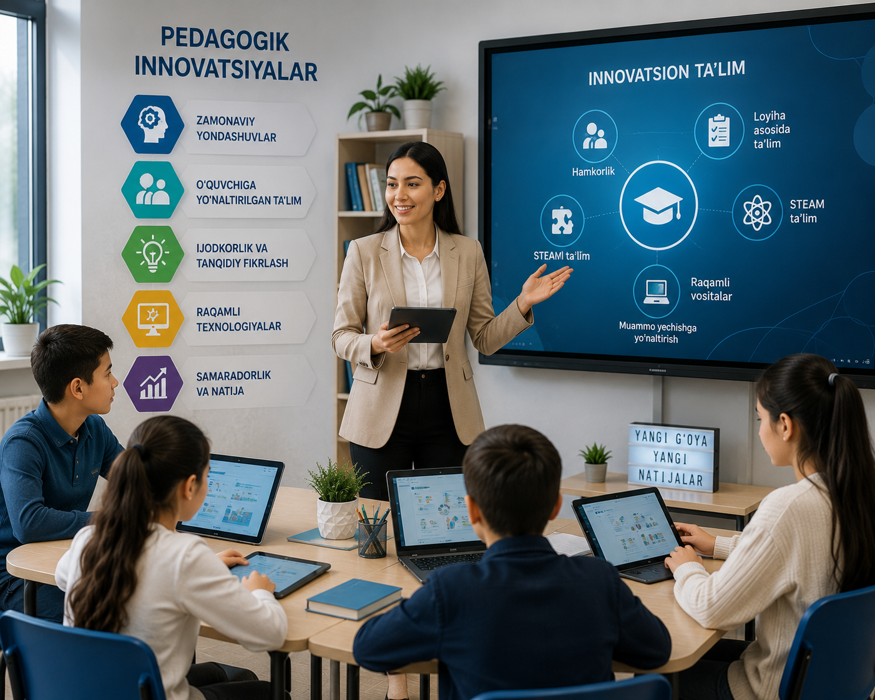
Pedagogical Innovations: A Key Driver of Modern Education

Pedagogical Innovations: A Key Driver of Modern Education

Pedagogical Innovations: A Key Driver of Modern Education

Education is continuously evolving in response to technological advancements, globalization, artificial intelligence (AI), and the changing needs of society. Modern teachers are expected not only to deliver knowledge but also to create engaging, student-centered learning environments that foster creativity, critical thinking, collaboration, and lifelong learning. In this context, pedagogical innovation has become one of the most important factors in improving educational quality.

Pedagogical innovations involve introducing new teaching methods, educational technologies, assessment approaches, and learning strategies that make education more effective, interactive, and relevant to the challenges of the 21st century. These innovations help students acquire practical skills, solve real-world problems, and prepare for future careers.

For students and future educators of the Bukhara State Pedagogical Institute, understanding and applying pedagogical innovations is essential for professional success and for contributing to the modernization of education.


1. What Are Pedagogical Innovations?

Pedagogical innovations refer to the development and implementation of new educational ideas, teaching methods, technologies, and organizational approaches that improve the learning process.

They include:

  • innovative teaching methodologies;

  • digital learning technologies;

  • modern assessment systems;

  • student-centered instruction;

  • technology-enhanced learning environments.

The ultimate goal is to improve learning outcomes and educational quality.


2. Objectives of Pedagogical Innovation

The primary objectives are to:

  • improve the quality of education;

  • encourage independent learning;

  • develop creativity and innovation;

  • strengthen practical competencies;

  • prepare learners for future careers.

Innovative teaching transforms students from passive listeners into active participants in the learning process.


3. Modern Educational Innovations

Many innovative approaches are widely used in education today, including:

  • STEAM education;

  • Project-Based Learning (PBL);

  • Problem-Based Learning;

  • Blended Learning;

  • Online and Distance Learning;

  • Digital Pedagogy;

  • Artificial Intelligence in Education.

These approaches make learning more meaningful, engaging, and practical.


4. The Role of an Innovative Teacher

An innovative educator should:

  • adopt modern teaching methods;

  • integrate educational technologies;

  • encourage inquiry and research;

  • support creativity and collaboration;

  • continuously improve professional competencies.

Teachers play a critical role in creating learning environments that inspire curiosity and innovation.


5. Digital Technologies and Innovation

Digital transformation has accelerated educational innovation.

Frequently used technologies include:

  • Learning Management Systems (LMS);

  • virtual laboratories;

  • interactive whiteboards;

  • educational mobile applications;

  • artificial intelligence tools;

  • Virtual Reality (VR);

  • Augmented Reality (AR).

These technologies increase student engagement and improve learning experiences.


6. Innovative Assessment Methods

Assessment has also evolved alongside teaching practices.

Modern assessment methods include:

  • online quizzes;

  • digital portfolios;

  • project-based assessment;

  • formative assessment;

  • peer assessment;

  • self-assessment.

These approaches evaluate both learning outcomes and the learning process.


7. Benefits of Pedagogical Innovations

Innovative teaching approaches help:

  • improve educational quality;

  • increase student motivation;

  • develop critical thinking;

  • strengthen teamwork skills;

  • encourage creativity;

  • prepare students for future professions.

Innovation makes learning more practical, relevant, and enjoyable.


8. Challenges of Implementing Innovation

Despite many benefits, educational innovation faces several challenges:

  • limited technological infrastructure;

  • insufficient digital literacy;

  • need for continuous teacher training;

  • limited financial resources;

  • resistance to organizational change.

Successful implementation requires strategic planning, investment, and ongoing professional development.


9. Recommendations for Future Teachers

Future educators should:

  • study innovative teaching methodologies;

  • improve digital competencies;

  • participate in educational research;

  • learn from international best practices;

  • use artificial intelligence responsibly;

  • engage in lifelong professional learning.

Continuous improvement enables teachers to remain effective in rapidly changing educational environments.


10. The Future of Pedagogical Innovation

Educational innovation will continue to expand through emerging technologies.

Future trends include:

  • AI-powered learning;

  • adaptive learning platforms;

  • virtual and augmented reality;

  • personalized education;

  • learning analytics;

  • intelligent educational systems.

These innovations will help create more inclusive, flexible, and effective educational experiences.


Conclusion

Pedagogical innovations play a crucial role in transforming modern education by integrating new teaching methods, digital technologies, and learner-centered approaches. They improve educational quality, promote active learning, and prepare students for the opportunities and challenges of the future. Students and future educators of the Bukhara State Pedagogical Institute who embrace innovative teaching practices will be better equipped to inspire learners, improve educational outcomes, and contribute to the continuous development of education in the digital age.

SEO Keywords: pedagogical innovations, innovative teaching methods, educational innovation, digital pedagogy, educational technology, STEAM education, artificial intelligence in education, modern teaching, Bukhara State Pedagogical Institute, future of education.