(365) 226-10-97 buxdpi@buxdpi.uz 2 Piridastgir Street, Bukhara City
shape
shape

What Should a 21st-Century Teacher Be Like? Essential Competencies for Modern Educators

What Should a 21st-Century Teacher Be Like? Essential Competencies for Modern Educators

What Should a 21st-Century Teacher Be Like? Essential Competencies for Modern Educators

Education in the 21st century is being transformed by digital technologies, artificial intelligence (AI), globalization, and rapid social change. As a result, the role of teachers has evolved far beyond simply delivering knowledge. Today's educators are expected to inspire learners, develop critical thinking, integrate technology into teaching, and prepare students for a constantly changing world.

For students and graduates of the Bukhara State Pedagogical Institute, understanding the competencies required of modern educators is essential for building a successful teaching career and contributing to the future of education.


1. Who Is a 21st-Century Teacher?

A 21st-century teacher is more than a subject expert. They are a mentor, facilitator, motivator, and lifelong learner who helps students develop the knowledge, skills, and attitudes needed for success in education, work, and everyday life.

A modern teacher:

  • places students at the center of the learning process;
  • encourages independent and critical thinking;
  • uses innovative teaching methods;
  • integrates digital technologies into education;
  • continuously develops professional competencies.

Teaching today is about guiding students to become active, responsible, and independent learners.


2. Professional Knowledge and Subject Expertise

Strong subject knowledge remains the foundation of effective teaching.

Every teacher should possess:

  • comprehensive knowledge of their subject;
  • understanding of modern teaching methodologies;
  • lesson planning and curriculum design skills;
  • effective assessment techniques;
  • classroom management abilities;
  • knowledge of national educational standards.

Professional competence ensures high-quality education and student achievement.


3. Digital Competence

Digital literacy has become an essential requirement for every educator.

Modern teachers should be able to:

  • use learning management systems (LMS);
  • conduct online and blended classes;
  • create multimedia presentations;
  • design digital learning resources;
  • develop online assessments;
  • use artificial intelligence tools responsibly to support teaching and learning.

Technology should enhance learning rather than replace the teacher.


4. Soft Skills

Technical expertise alone is no longer sufficient.

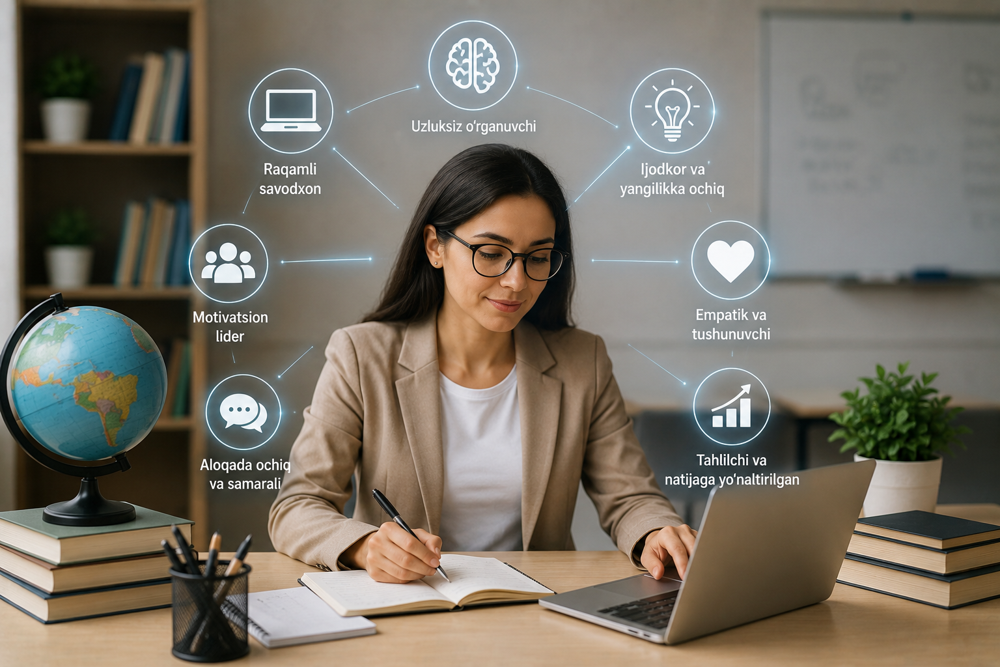
Successful educators demonstrate important interpersonal skills, including:

  • communication;
  • critical thinking;
  • creativity;
  • teamwork;
  • leadership;
  • time management;
  • problem-solving;
  • adaptability;
  • emotional intelligence.

These skills enable teachers to create positive learning environments and build strong relationships with students.


5. Student-Centered Learning

Modern education emphasizes active student participation.

A 21st-century teacher should:

  • recognize individual learning needs;
  • encourage curiosity and creativity;
  • promote collaborative learning;
  • support independent learning;
  • provide constructive feedback;
  • create an inclusive classroom environment.

Student-centered teaching improves motivation and learning outcomes.


6. Lifelong Professional Development

Continuous learning is one of the defining characteristics of successful educators.

Teachers should regularly:

  • attend professional development programs;
  • participate in educational conferences;
  • read current research;
  • learn from international best practices;
  • improve digital competencies;
  • explore innovative teaching strategies.

Education professionals must continue learning throughout their careers.


7. Ethics and Professional Responsibility

Teachers play an important role in shaping future generations.

Essential professional values include:

  • honesty;
  • responsibility;
  • fairness;
  • respect;
  • integrity;
  • tolerance;
  • professional ethics.

Students often learn as much from a teacher's behavior as they do from classroom instruction.


8. Global Perspective and Foreign Languages

Global education requires teachers to think beyond national boundaries.

Learning foreign languages enables educators to:

  • participate in international educational projects;
  • access global research and educational resources;
  • collaborate with teachers from other countries;
  • apply for international grants and scholarships;
  • share professional experience internationally.

Global competence has become increasingly valuable in modern education.


9. Artificial Intelligence and Educational Innovation

Artificial intelligence is becoming an important part of educational practice.

Teachers should learn how to:

  • use AI tools responsibly;
  • prepare learning materials more efficiently;
  • personalize learning experiences;
  • automate routine assessment tasks;
  • support students with digital learning technologies.

AI should be viewed as a teaching assistant that enhances educational quality while maintaining the teacher's central role.


10. Recommendations for Future Teachers

Students preparing for teaching careers should:

  • continuously improve subject knowledge;
  • strengthen digital literacy;
  • develop communication and leadership skills;
  • learn foreign languages;
  • participate in teaching practice and volunteer activities;
  • engage in educational research;
  • build a professional portfolio and personal brand.

Continuous self-improvement is the foundation of long-term professional success.


Why Is the Role of the Teacher Changing?

Today's teacher is expected to serve multiple roles:

  • educator;
  • mentor;
  • facilitator;
  • innovator;
  • researcher;
  • technology integrator;
  • lifelong learner.

Modern education requires teachers to inspire curiosity, encourage innovation, and prepare students for challenges that continue to evolve.


Conclusion

The 21st-century teacher combines professional expertise, pedagogical excellence, digital competence, ethical responsibility, and strong interpersonal skills. Rather than simply delivering information, modern educators guide students toward becoming independent thinkers, lifelong learners, and responsible citizens. Students and graduates of the Bukhara State Pedagogical Institute who continuously develop these competencies will be well prepared to meet the evolving demands of education and make meaningful contributions to schools, communities, and society.

SEO Keywords: 21st-century teacher, modern teacher, teacher competencies, digital pedagogy, educational technology, artificial intelligence in education, soft skills for teachers, teacher professional development, Bukhara State Pedagogical Institute, future of education