(365) 226-10-97 buxdpi@buxdpi.uz 2 Piridastgir Street, Bukhara City
shape
shape

What Is an API? A Complete Guide to Application Programming Interfaces

What Is an API? A Complete Guide to Application Programming Interfaces

What Is an API? A Complete Guide to Application Programming Interfaces

What Is an API? A Complete Guide to Application Programming Interfaces

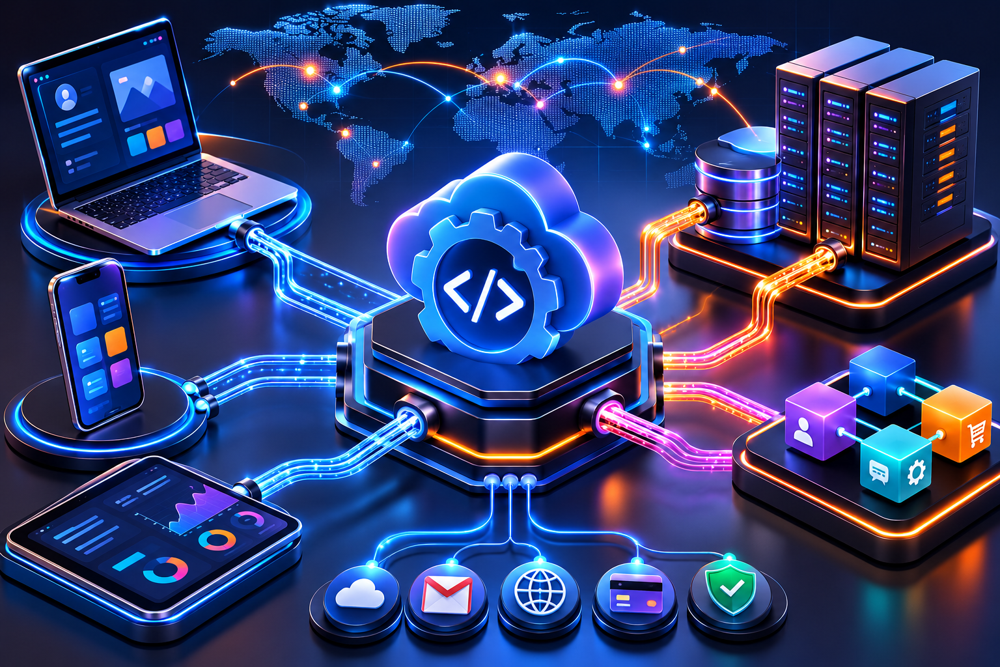
In today's digital world, applications rarely operate in isolation. Mobile apps communicate with cloud servers, online stores connect to payment gateways, social media platforms integrate with third-party services, and artificial intelligence systems exchange information with numerous applications. Behind all of these interactions is a technology known as an Application Programming Interface (API).

An API enables different software applications to communicate with each other through a defined set of rules and protocols. Instead of building every feature from scratch, developers can connect existing services, making software development faster, more efficient, and more reliable. APIs have become an essential component of modern software engineering and are widely used in web development, mobile applications, cloud computing, financial technology, healthcare systems, and artificial intelligence.

For students and educators at the Bukhara State Pedagogical Institute, understanding APIs provides a strong foundation for careers in software development, cloud computing, DevOps, cybersecurity, mobile development, and enterprise information systems.


1. What Is an API?

An Application Programming Interface (API) is a set of rules that allows different software applications to communicate and exchange information.

Simply put, an API acts as a messenger between applications. One application sends a request, another processes it, and the requested information is returned.

Common examples include:

  • a weather application retrieving weather forecasts;

  • an online shopping website processing payments;

  • Google Maps displaying location information;

  • social media login services;

  • AI applications accessing machine learning models.

Without APIs, these services would not be able to work together efficiently.


2. Why Are APIs Important?

APIs simplify software development by enabling applications to reuse existing services instead of recreating them.

The main benefits of APIs include:

  • seamless data exchange;

  • system integration;

  • process automation;

  • code reusability;

  • faster software development;

  • improved scalability;

  • easier maintenance;

  • enhanced user experience.

APIs have become the foundation of modern digital ecosystems.


3. How Does an API Work?

Most APIs operate using a client-server architecture.

The typical workflow is as follows:

  1. A user performs an action in an application.

  2. The application sends an API request.

  3. The server receives the request.

  4. The server processes the request.

  5. The requested data is retrieved.

  6. A response is returned to the client.

This entire process usually takes only a fraction of a second.


4. Types of APIs

APIs can be categorized based on their accessibility.

Open APIs

Available for public use by developers.

Examples include:

  • OpenWeather API;

  • Google Maps API.


Private APIs

Used internally within an organization.

They are designed to improve communication between internal systems.


Partner APIs

Shared only with authorized business partners.

These APIs often require contractual agreements and authentication.


Public APIs

Accessible to registered developers and organizations through documented interfaces.

Public APIs encourage innovation by allowing developers to build applications using existing platforms.


5. REST API

One of the most widely used API architectures is REST (Representational State Transfer).

REST APIs commonly use HTTP methods such as:

  • GET – retrieve information;

  • POST – create new resources;

  • PUT – update an existing resource;

  • PATCH – partially update a resource;

  • DELETE – remove a resource.

REST APIs are popular because they are simple, scalable, and compatible with nearly every programming language.


6. Data Formats Used in APIs

APIs exchange information using structured data formats.

The two most common formats are:

JSON

JSON (JavaScript Object Notation) is lightweight, readable, and widely supported.

Example:

{
  "name": "Ali",
  "age": 21,
  "city": "Bukhara"
}

Today, JSON is the preferred format for most web APIs.


XML

XML (Extensible Markup Language) was widely used before JSON became popular.

Although XML is still used in enterprise systems and legacy software, JSON has become the industry standard for modern API development.


7. API Security

Protecting APIs is critical because they often handle sensitive information.

Common API security mechanisms include:

  • HTTPS encryption;

  • API Keys;

  • OAuth 2.0;

  • JSON Web Tokens (JWT);

  • Authentication;

  • Authorization;

  • Rate Limiting;

  • Input validation.

A secure API helps protect both user data and organizational systems from unauthorized access.


8. Where Are APIs Used?

APIs are used across virtually every industry.

Major application areas include:

  • web applications;

  • mobile applications;

  • banking and financial services;

  • e-commerce platforms;

  • healthcare systems;

  • social networking services;

  • cloud computing;

  • enterprise resource planning (ERP);

  • customer relationship management (CRM);

  • artificial intelligence platforms;

  • Internet of Things (IoT).

Modern digital services rely heavily on APIs to ensure smooth communication between systems.


9. How to Learn API Development

A structured learning approach helps beginners understand API technologies effectively.

Recommended learning steps include:

  1. Learn the fundamentals of HTTP.

  2. Understand JSON and XML.

  3. Study REST API architecture.

  4. Practice using API testing tools such as Postman.

  5. Build simple APIs with Python or JavaScript.

  6. Learn frameworks such as Django REST Framework or FastAPI.

  7. Read and understand API documentation.

  8. Develop real-world projects using public APIs.

Hands-on practice is essential for mastering API development.


10. The Future of APIs

API technologies continue to evolve as software systems become more interconnected.

Emerging trends include:

  • GraphQL;

  • gRPC;

  • Microservices;

  • Serverless APIs;

  • AI-powered APIs;

  • OpenAPI Specification;

  • API Gateways;

  • Event-Driven Architecture.

As digital transformation accelerates worldwide, APIs will continue to play a central role in connecting applications, services, and devices.


Conclusion

Application Programming Interfaces (APIs) have become one of the most important technologies in modern software development. They enable seamless communication between applications, simplify system integration, and accelerate innovation across industries. Understanding REST APIs, HTTP protocols, JSON, authentication, and API security is an essential skill for every software developer. For students and educators at the Bukhara State Pedagogical Institute, mastering API technologies provides valuable opportunities in web development, cloud computing, DevOps, mobile application development, artificial intelligence, and enterprise software engineering.

SEO Keywords: API, Application Programming Interface, What is API, REST API, HTTP, JSON, API Security, OAuth 2.0, JWT, FastAPI, Django REST Framework, GraphQL, gRPC, Microservices, Bukhara State Pedagogical Institute.